
Google lanza SynthID para identificar contenido IA, pero con limitaciones
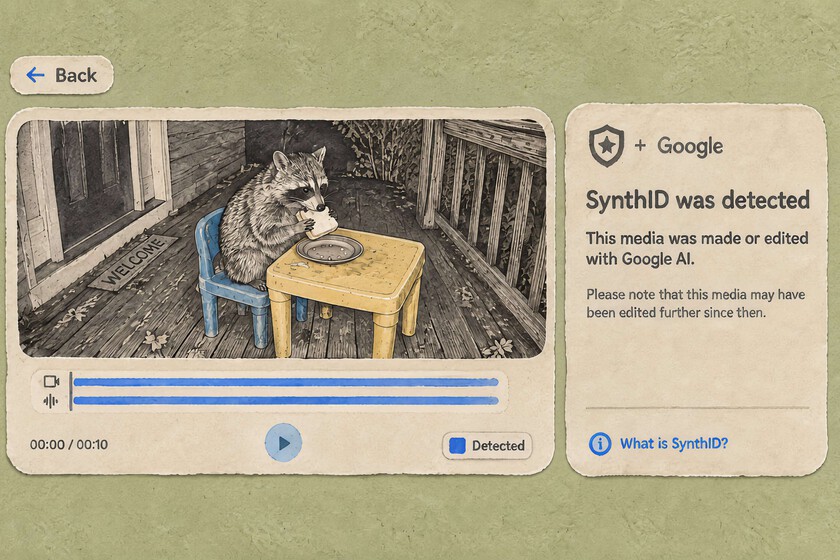
En un món on les notícies falses proliferen, especialment a través de xarxes socials com X o Facebook, l'arribada de la intel·ligència artificial (IA) generativa ha complicat encara més la situació. La capacitat de crear imatges que difuminen la línia entre el real i l'artificial ha disparat les alarmes. Per abordar aquest problema, Google DeepMind va llançar el 2023 SynthID, una eina inicialment d'ús tancat per identificar imatges falses, que ara s'ha obert al públic.
SynthID utilitza tecnologia de marques d'aigua per incrustar una marca imperceptible en imatges, vídeos, àudios o textos generats per IA. Aquesta marca està dissenyada per resistir retalls, filtres, canvis de fotogrames i compressió, tant en imatges com en vídeos i àudios. Segons Google, més de 180.000 milions d'imatges i vídeos, juntament amb més de 240.000 anys d'àudio, han estat marcats amb aquesta tecnologia.
No obstant això, l'eina està lluny de ser infal·lible. Encara que és fàcil d'utilitzar, ja que n'hi ha prou amb pujar un fitxer al web oficial del servei o a Gemini per obtenir un resultat en segons, té limitacions significatives. Per exemple, només permet 20 consultes diàries i no pot detectar marques d'IA en contingut generat per programes que no siguin de Google o els seus socis. Això significa que si el contingut es crea amb un altre programa d'IA, SynthID no podrà identificar-lo.
A més, el detector només pot saber si alguna cosa és IA si s'ha creat amb IA de Google o dels seus socis. Meta, per exemple, ja el 2024 havia assenyalat que no era possible identificar tot el contingut generat per IA, i OpenAI ha reconegut que la seva eina, basada en la de Google, també té limitacions similars.
Hi ha alternatives a SynthID, com els sistemes llançats per Adobe i Meta, i la proposta de l'estàndard C2PA (Coalition for Content Provenance and Authenticity), que gestiona tecnologies per etiquetar continguts generats per IA. No obstant això, la solució més utòpica continua sent confiar en la humanitat.
Al març de 2025, el Govern va aprovar un avantprojecte de llei que considera infracció greu no etiquetar contingut generat per IA. Malgrat això, el bombardeig d'elements generats per IA i l'aparició d'influencers falsos continuen sent un desafiament.
En un mundo donde las noticias falsas proliferan, especialmente a través de redes sociales como X o Facebook, la llegada de la inteligencia artificial (IA) generativa ha complicado aún más la situación. La capacidad de crear imágenes que difuminan la línea entre lo real y lo artificial ha disparado las alarmas. Para abordar este problema, Google DeepMind lanzó en 2023 SynthID, una herramienta inicialmente de uso cerrado para identificar imágenes falsas, que ahora se ha abierto al público.
SynthID utiliza tecnología de marcas de agua para incrustar una marca imperceptible en imágenes, vídeos, audios o textos generados por IA. Esta marca está diseñada para resistir recortes, filtros, cambios de fotogramas y compresión, tanto en imágenes como en vídeos y audios. Según Google, más de 180.000 millones de imágenes y vídeos, junto con más de 240.000 años de audio, han sido marcados con esta tecnología.
No obstante, la herramienta está lejos de ser infalible. Aunque es fácil de usar, ya que basta con subir un archivo a la web oficial del servicio o a Gemini para obtener un resultado en segundos, tiene limitaciones significativas. Por ejemplo, solo permite 20 consultas diarias y no puede detectar marcas de IA en contenido generado por programas que no sean de Google o sus socios. Esto significa que si el contenido se crea con otro programa de IA, SynthID no podrá identificarlo.
Además, el detector solo puede saber si algo es IA si se ha creado con IA de Google o de sus socios. Meta, por ejemplo, ya en 2024 había señalado que no era posible identificar todo el contenido generado por IA, y OpenAI ha reconocido que su herramienta, basada en la de Google, también tiene limitaciones similares.
Existen alternativas a SynthID, como los sistemas lanzados por Adobe y Meta, y la propuesta del estándar C2PA (Coalition for Content Provenance and Authenticity), que gestiona tecnologías para etiquetar contenidos generados por IA. Sin embargo, la solución más utópica sigue siendo confiar en la humanidad.
En marzo de 2025, el Gobierno aprobó un anteproyecto de ley que considera infracción grave no etiquetar contenido generado por IA. A pesar de esto, el bombardeo de elementos generados por IA y la aparición de influencers falsos continúan siendo un desafío.
In a world where fake news proliferates, especially through social networks like X or Facebook, the arrival of generative artificial intelligence (AI) has further complicated the situation. The ability to create images that blur the line between the real and the artificial has raised alarms. To address this issue, Google DeepMind launched SynthID in 2023, a tool initially for closed use to identify fake images, which has now been opened to the public.
SynthID uses watermark technology to embed an imperceptible mark in images, videos, audios, or texts generated by AI. This mark is designed to withstand cropping, filters, frame changes, and compression, both in images and in videos and audios. According to Google, more than 180 billion images and videos, along with more than 240,000 years of audio, have been marked with this technology.
However, the tool is far from infallible. Although it is easy to use, as it only requires uploading a file to the service's official website or to Gemini to get a result in seconds, it has significant limitations. For example, it only allows 20 daily queries and cannot detect AI marks in content generated by programs other than Google or its partners. This means that if the content is created with another AI program, SynthID will not be able to identify it.
Furthermore, the detector can only know if something is AI if it has been created with AI from Google or its partners. Meta, for example, had already pointed out in 2024 that it was not possible to identify all AI-generated content, and OpenAI has acknowledged that its tool, based on Google's, also has similar limitations.
There are alternatives to SynthID, such as the systems launched by Adobe and Meta, and the proposal of the C2PA (Coalition for Content Provenance and Authenticity) standard, which manages technologies to label AI-generated content. However, the most utopian solution remains to trust in humanity.
In March 2025, the Government approved a draft bill that considers it a serious infringement not to label AI-generated content. Despite this, the bombardment of AI-generated elements and the emergence of fake influencers continue to be a challenge.
¿Te ha interesado esta noticia?
Recibe cada mañana el resumen de IA y sociedad directo en tu email.
Suscríbete gratis →